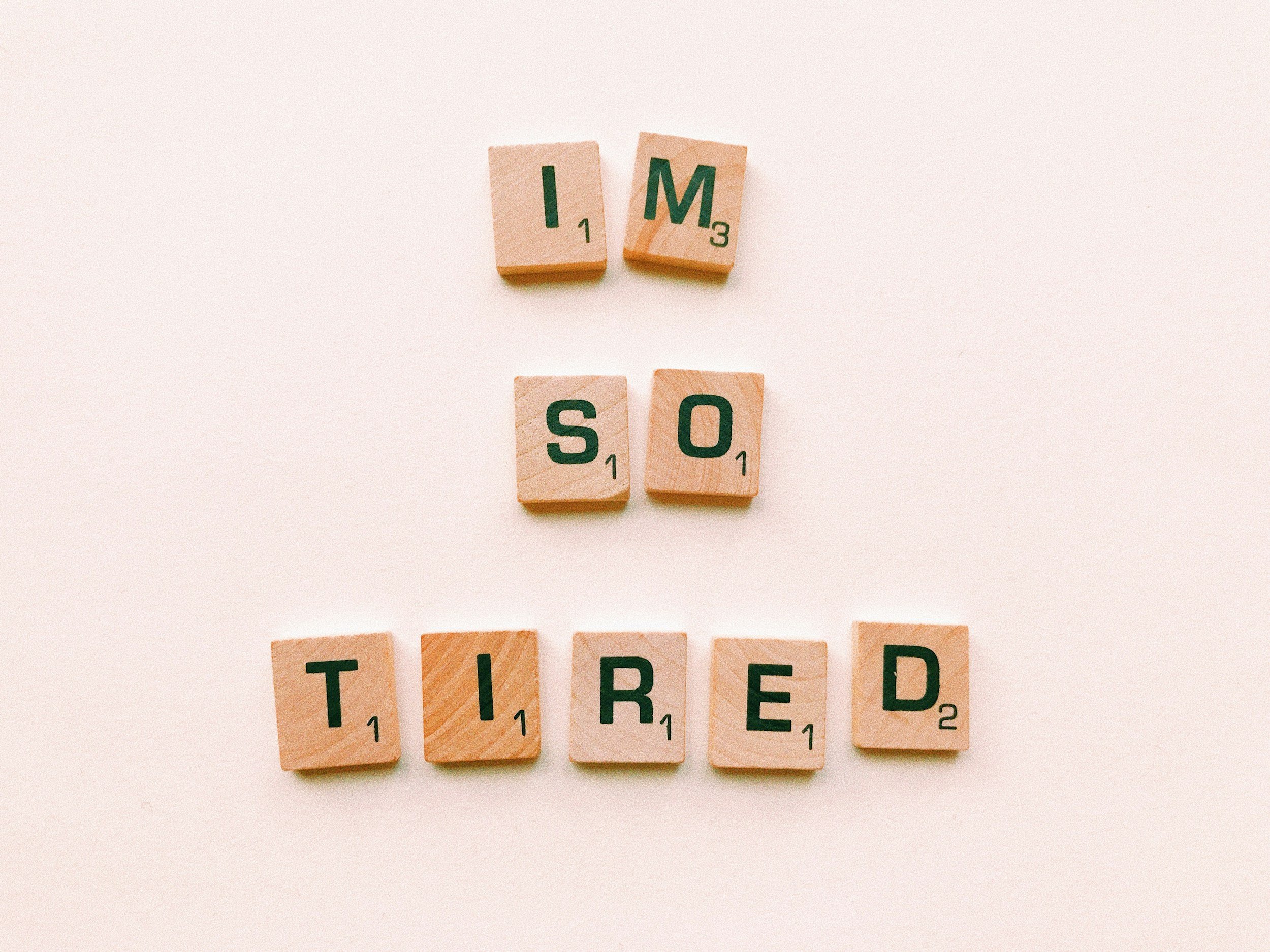
Why I Feel Numb Even When Life Looks Fine
When Everything Looks Stable but Something Feels Muted
Life can look fine from the outside and still feel strangely flat on the inside.
You may have a job, a family, a home, responsibilities, routines, and people who depend on you. You may still get up, go to work, answer messages, pay bills, handle problems, and show up where you are supposed to show up.
Nothing may look obviously wrong.
But internally, something feels muted.
You do not feel terrible exactly. You do not feel good either. You may feel distant from your own life, less excited by things you used to enjoy, less emotionally affected by things that should matter, or unable to access much beyond irritation, fatigue, or quiet indifference.
For many men, this is confusing because life does not appear bad enough to justify the feeling.
That contradiction is often the hardest part.
In my work with men, I often hear some version of this: “I should be grateful. Nothing is really wrong. I just do not feel much.” Sometimes the man saying this is successful. Sometimes he is married, employed, financially stable, respected, or deeply responsible. From the outside, his life may look steady. From the inside, it feels distant.
Emotional numbness is not weakness. It is not laziness. It is not proof that you are ungrateful, broken, or incapable of connection. It is often a signal that your emotional system has been overloaded, underused, avoided, suppressed, or disconnected from meaningful contact for too long.
The goal is not to force yourself to feel more.
The goal is to understand why numbness is there, what it may be protecting you from, and how to slowly rebuild access to your own life.
Why Numbness Can Show Up When Life Looks Fine
Emotional numbness is often confusing because it does not always arrive during obvious crisis. Sometimes it shows up during stability. You finally have the job, the house, the family, the routine, or the progress you worked for, but instead of feeling satisfied, you feel blank.
That can create shame. A man may think, “What is wrong with me? I have more than many people. I should not feel this way.” But emotional experience does not respond only to external success. It responds to stress load, meaning, safety, exhaustion, connection, identity, and whether your life has enough room for actual emotional processing.
A man in his late thirties has a steady career, a spouse, children, and a decent life. He is not in active crisis. He is not falling apart. But when he gets home, he feels like he is going through motions. His child is excited to show him something, and he knows he should feel warmth, but mostly he feels tired and mentally elsewhere. Later, he feels guilty, so he tries to compensate by being productive or buying something for the family. The numbness remains.
What I often notice in sessions is that men try to solve numbness with logic. They list reasons they should be fine. They compare their life to people who have it worse. They remind themselves of their responsibilities. None of that is necessarily wrong, but it often misses the point.
Numbness is not usually solved by proving your life is objectively okay. It is better understood by asking what your emotional system has had to carry, shut down, postpone, or avoid.
Where does your life look fine from the outside, but feel disconnected from the inside?
Write two short lists. First, list what looks stable in your life. Then list what feels absent emotionally. Do not argue with either list. The goal is not to decide whether you “deserve” to feel numb. The goal is to see the difference between external functioning and internal experience.
Framework One: Numbness as Protection, Not a Character Problem
One helpful way to understand emotional numbness is to see it as a form of protection. That does not mean it feels good. It means your mind and body may be trying to reduce emotional overload by turning down the volume.
When stress, grief, resentment, disappointment, pressure, or unresolved conflict becomes too much, some people feel flooded. Others feel shut down. For many men, shutdown is more familiar than emotional overwhelm. They may not cry easily. They may not talk about pain directly. They may stay calm, handle tasks, and move forward.
On the surface, that can look like strength.
Sometimes it is strength.
But if emotional shutdown becomes the main strategy, it can start muting everything, not just pain. You may avoid sadness and also lose access to joy. You may block anxiety and also lose access to excitement. You may suppress resentment and also feel less love, gratitude, or desire.
Emotional Blunting
A reduced intensity of emotional response. In daily life, this may feel like being flat, muted, or less affected by things that used to matter.
Anhedonia
A reduced interest in or pleasure from things that might normally feel rewarding, meaningful, enjoyable, or motivating.
Research on emotional blunting and anhedonia helps explain why numbness can involve more than sadness. Emotional blunting can involve a reduced intensity of emotional response, while anhedonia involves reduced interest or pleasure. In everyday language, many people describe both as feeling flat, distant, or unable to care the way they used to.
A man learns over years to stay composed. When something bothers him, he tells himself to be practical. When he is disappointed, he moves on. When he is hurt, he gets quiet. That strategy helps him avoid conflict and keep life moving. But years later, he notices he rarely feels deeply moved by anything. He did not choose numbness directly. He trained himself to override emotional signals until the signal got weaker.
What emotions have you learned to push down because they seemed inconvenient, inefficient, or unsafe?
Use a simple signal check three times a day. Ask, “What emotion might be here if I slowed down long enough to notice it?” Do not force an answer. Start with basic categories: irritated, tired, disappointed, tense, sad, anxious, relieved, content, disconnected. Naming is not fixing. Naming is reopening the channel.
This is something I say directly in therapy: numbness is often not the absence of emotion. It is emotion behind a closed door.
The Difference Between Calm, Disconnected, and Depressed
Not every quiet emotional state is a problem. Calm is not numbness. Stability is not avoidance. Maturity does not require constant emotional intensity.
A calm man can feel. He may not be dramatic or expressive, but he still has access to warmth, concern, satisfaction, sadness, humor, desire, and conviction. He can be steady without being shut down.
Disconnection is different. Disconnection feels like distance from your own life. You may be present physically but not emotionally. You may go through routines without much inner response. You may still love people, but feel less connected to the experience of loving them.
Depression can overlap with numbness, but they are not always the same. Depression may include persistent low mood, loss of interest, sleep or appetite changes, hopelessness, guilt, low energy, concentration problems, and thoughts of death or self-harm. Some men do not experience depression as obvious sadness. They experience it as irritability, flatness, withdrawal, or lack of motivation.
This article is not diagnosing you. Emotional numbness can be related to stress, burnout, grief, depression, trauma, relationship strain, medication effects, substance use, or medical issues. If the numbness is severe, persistent, or connected to thoughts of self-harm, it is important to reach out for professional support quickly. If you are in crisis in the United States, call or text 988.
A man says, “I am calm. I just do not get emotional.” But when he looks closer, he is not actually calm. He avoids hard conversations, feels little enjoyment, has stopped seeing friends, scrolls late at night, and feels detached from his family. What he called calm may actually be disconnection.
Does your numbness feel peaceful, or does it feel like distance?
Ask yourself four questions at the end of the day: What did I enjoy? What bothered me? Who did I feel close to? What did I avoid feeling? If the answers are consistently blank, that is information worth taking seriously.
Framework Two: The Performance Self and the Emotional Self
A second useful framework is the Performance Self and the Emotional Self.
The Performance Self
The part of you that works, provides, solves, plans, achieves, protects, and keeps life moving. It is valuable and often highly trained.
The Emotional Self
The part of you that feels, wants, grieves, enjoys, connects, rests, hopes, and responds honestly to life.
The Performance Self is the part of you that works, provides, solves, plans, achieves, protects, and keeps life moving. It is valuable. Most men do not need less capability. They need capability that does not require emotional disconnection.
The Emotional Self is the part of you that feels, wants, grieves, enjoys, connects, rests, hopes, and responds honestly to life. This part may be quieter, less practiced, or less trusted. It may feel inefficient compared to the Performance Self.
Problems develop when the Performance Self runs the entire system.
A man may become excellent at functioning and poor at noticing. He may know what needs done, but not what he feels. He may know what others need from him, but not what he needs. He may know how to push through, but not how to recover. Over time, life becomes a series of tasks instead of an experience he actually inhabits.
A father, husband, and professional handles his responsibilities well. He is reliable. People respect him. But when asked what he wants, he struggles to answer. When asked what he feels, he gives a thought instead. When asked what he enjoys, he names things he used to enjoy. His Performance Self is strong. His Emotional Self has been neglected.
This is not a moral failure. It is a training issue. Whatever you practice becomes more accessible. If you practice output for years and rarely practice emotional awareness, emotional access may feel awkward at first.
Which part of you gets more time and training: the part that performs, or the part that feels and connects?
Create a two column check-in. On one side, write “What I handled today.” On the other side, write “What I experienced today.” Men often have a full first column and a thin second column. That imbalance can show where numbness is being reinforced.
You do not have to abandon discipline, ambition, or responsibility. The goal is to add range. A strong life needs both structure and contact. Performance tells you what got done. Emotional awareness tells you whether the life you are building still feels like yours.
Why Men Often Stay Functional While Feeling Detached
Many men stay functional for a long time while feeling emotionally detached. This is one reason numbness can go unnoticed or be minimized. If bills are paid, work is done, and responsibilities are met, the assumption becomes, “I must be fine.”
But functioning is not the same as being connected.
A man can perform well while feeling empty. He can be dependable while feeling alone. He can provide while feeling unseen. He can appear calm while carrying resentment, grief, boredom, fear, or quiet despair he has never fully named.
This is especially common when a man has built his identity around being useful. If his role is to handle things, he may not feel permitted to need much. If his value is tied to being steady, he may hide anything that feels uncertain. If his family depends on him, he may tell himself there is no room to pause.
The result is often a narrow emotional range. Irritation comes through because it feels active and protective. Fatigue comes through because the body eventually insists. But softer emotions, such as sadness, tenderness, longing, or grief, may be harder to access.
A man tells his wife he is “fine” because he does not know what else to say. He is not trying to be dishonest. He has no clear emotional language for what is happening. He notices he is less affectionate, more impatient, and less interested in sex or connection, but he explains it as stress. Stress may be part of it. But the deeper issue may be that he has become disconnected from his internal life.
What do you usually say when someone asks how you are, and how accurate is that answer?
Replace “fine” with one more specific word this week. You do not have to give a speech. Try “drained,” “distracted,” “tense,” “flat,” “overloaded,” or “not very present.” Specific language helps your brain and your relationships work with reality instead of a default answer.
This is exactly what structured therapy is designed to help with. Not turning every feeling into a crisis. Not blaming you for being responsible. The work is helping you notice what is true before it has to become loud.
How to Start Reconnecting Without Forcing Yourself to Feel
When men realize they feel numb, they often try to force themselves out of it. They may think, “I need to feel grateful. I need to enjoy this. I need to be more present.” The intention is understandable, but pressure usually does not restore emotional access. It often creates more shutdown.
A better approach is gradual reconnection.
You rebuild emotional access through small, repeated contact with your body, values, relationships, and environment. This is not medical advice, but behaviorally, recovery often requires slowing down enough for your nervous system to register what is happening. Sleep, movement, nutrition, reduced alcohol use, time outside, and less constant stimulation can matter because they affect your capacity to notice and respond.
Start with the body. Numbness often lives below the neck before it becomes language. You may not know what you feel emotionally, but you can notice tight shoulders, shallow breathing, jaw tension, heaviness, restlessness, or fatigue. The body may give you the first honest data.
Then move toward values. Ask what kind of man you want to be in the next ordinary moment, not in some grand future version of life. Present for dinner. Patient during bedtime. Honest with your spouse. Focused during work. Willing to rest without earning it.
A man who feels numb around his family starts with ten minutes of phone-free presence after work. At first, it feels mechanical. He does not suddenly feel warm and connected. But he keeps showing up. Over time, his system learns that connection is not another performance demand. It is a place to return.
What is one small part of your life you want to feel more present for again?
Choose one daily reconnection anchor for two weeks. Keep it simple: a ten minute walk without headphones, five minutes sitting with your child without multitasking, a short check-in with your spouse, or writing three sentences about what you noticed that day. Do not measure success by emotional intensity. Measure it by honest contact.
You do not have to untangle this alone.
How Structured Therapy Helps Men Work Through Numbness
A common hesitation men have about therapy is that it may feel vague, inefficient, or overly emotional. If you already feel numb, the idea of sitting down to “talk about feelings” may sound frustrating or pointless.
Good therapy for emotional numbness should be more structured than that.
In a consultation, the first goal is clarity. What does numbness feel like for you? When did it start? What makes it better or worse? Is it connected to work, marriage, fatherhood, burnout, grief, trauma, medication, substances, depression, or life transition? What have you already tried? What would meaningful improvement look like?
In ongoing sessions, the work can be practical and focused. We may look at patterns of avoidance, emotional suppression, stress physiology, identity, relationship habits, and the gap between external success and internal connection. We may use structured reflection, values work, CBT-informed tools, behavioral activation, communication practice, or nervous system regulation strategies.
A man starts therapy because he feels emotionally flat despite having a good life. He worries therapy will waste time. Early sessions identify that he has been running on performance for years, avoiding conflict, suppressing disappointment, and using productivity to outrun discomfort. His therapy goals become specific: rebuild emotional awareness, reduce shutdown at home, communicate more directly, and reconnect with values beyond output. That gives the work direction.
If therapy were structured and practical, what would make it worth your time?
Before reaching out, write three concrete goals. Examples: “I want to feel more present with my family,” “I want to understand why I feel flat,” or “I want to stop using work and distraction to avoid myself.”
For men looking for Men’s Online Therapy in Ohio, online sessions can provide a direct, efficient way to work on these patterns without adding travel time or another major disruption to the week. The goal is not to make you emotional for the sake of being emotional. The goal is to help you become more honest, steady, connected, and alive in the life you already have.
FAQ: Feeling Numb When Life Looks Fine
Is feeling emotionally numb the same as depression?
Not always. Emotional numbness can be connected to depression, but it can also show up with chronic stress, burnout, grief, trauma, emotional avoidance, relationship strain, medication effects, or major life transitions. Depression may include additional symptoms such as persistent low mood, loss of interest, sleep or appetite changes, hopelessness, poor concentration, or thoughts of death or self-harm.
Why do I feel numb when I should be happy?
Sometimes people expect external stability to automatically create internal satisfaction. But your emotional system also responds to stress, meaning, connection, unresolved pain, and whether you have space to process life. Feeling numb does not mean you are ungrateful. It may mean your system has been protecting itself, overloaded, or disconnected for too long.
Can stress make you feel emotionally numb?
Yes. Chronic stress can narrow emotional range. Some people become anxious or reactive. Others become flat, detached, or shut down. Stress can also interfere with reward and motivation systems, which may make enjoyable things feel less rewarding than they used to.
What should I do if I feel numb in my relationship?
Start by being more specific than “I am fine.” You might say, “I have felt disconnected lately, and I am trying to understand it.” Avoid blaming your partner or pretending nothing is happening. If numbness is affecting closeness, communication, affection, or patience, therapy can help you understand the pattern and rebuild connection more intentionally.
How long does it take to feel better?
It depends on the cause, severity, and how long the numbness has been present. Some men feel relief quickly once they understand the pattern and begin making changes. Deeper numbness tied to depression, trauma, grief, or long-term avoidance may take more time. The goal is not instant emotional intensity. The goal is steady reconnection.
Final Thoughts: Numbness Is a Signal Worth Listening To
Feeling numb when life looks fine can be unsettling because it challenges the story that you should be okay if everything looks stable.
But the outside of your life is not the whole picture.
You can be responsible and disconnected. Successful and flat. Loved and lonely. Functional and emotionally exhausted. None of that means you are broken. It means something inside your life needs attention, not judgment.
I want to be clear here: the goal is not to become dramatic, overly emotional, or less steady. The goal is to regain access to yourself. A man can be calm and emotionally present. Strong and honest. Responsible and connected. Disciplined and still able to feel joy, sadness, affection, grief, and meaning.
Numbness may have helped you survive a season. It may have helped you keep going. It may have protected you from emotions you did not have time, safety, or language to process.
But if numbness is now keeping you distant from your own life, it may be time to listen more closely.
Structured therapy can help you understand what happened, identify what keeps the numbness in place, and begin rebuilding emotional connection in a practical, grounded way. If you are in Ohio and looking for online therapy that is direct, structured, and respectful of men’s real responsibilities, Long Therapy Services offers support for men navigating emotional numbness, stress, burnout, life transitions, and disconnection.
Sam Long, LISW
Founder of Long Therapy Services, LLC
-Growth and Healing, Wherever You Are-
Ready to Feel More Connected Again?
If emotional numbness is affecting your relationships, motivation, or sense of connection to your own life, structured online therapy can help you understand the pattern and begin rebuilding steady, practical emotional access.
References
This article was developed using evidence-based research and established clinical literature. The references below informed the concepts discussed throughout this post.
- Ma H, Cai M, Wang H. Emotional Blunting in Patients With Major Depressive Disorder. Frontiers in Psychiatry. 2021. https://pmc.ncbi.nlm.nih.gov/articles/PMC8712545/
- Pizzagalli DA. Depression, Stress, and Anhedonia: Toward a Synthesis and Integrated Model. Annual Review of Clinical Psychology. 2014. https://pmc.ncbi.nlm.nih.gov/articles/PMC3972338/
- Moore SA, Zoellner LA, Mollenholt N. Are Expressive Suppression and Cognitive Reappraisal Associated with Stress-Related Symptoms? Behaviour Research and Therapy. 2008. https://pmc.ncbi.nlm.nih.gov/articles/PMC2629793/
Ready to Start?
If you are considering therapy, you can learn more about my approach, services, cost, and frequently asked questions below.
Educational Disclaimer
The information on this page is for educational purposes only and is not a substitute for professional therapy, diagnosis, or treatment. If you are in crisis, call or text 988, contact emergency services, or go to your nearest emergency department.